

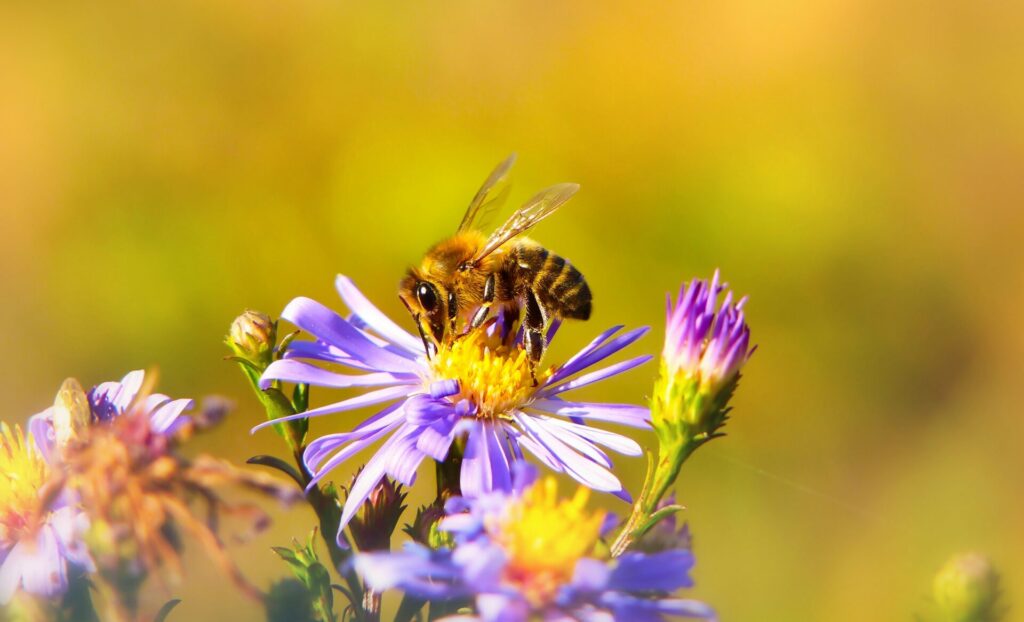
The great British summer is upon us, and as we enjoy the warmer months, our gardens become a sanctuary for both us and the buzzing bees. But did you know that letting a few weeds flourish can be a lifeline for our honeybee friends? According to researchers at the University of Sussex, late summer is a particularly challenging time for bees to find enough food. With fewer flowers in bloom and more competition for nectar, our gardens can become a haven for these essential pollinators.
The study, conducted around Brighton and Edinburgh, highlights the importance of late-summer blooming plants like thistles, ragwort, and knapweed. These so-called ‘weeds’ can provide a vital source of nourishment when bees need it most. So, before reaching for the lawnmower or weedkiller, consider letting nature take its course and allow these scruffy plants to thrive.
Dr Nicholas Balfour and Dr Ciaran Harris, co-authors of the study, emphasise the importance of providing forage for bees during this critical period. By planting late-summer blooming flowers and adjusting mowing schedules, we can create a more bee-friendly environment. This not only benefits honeybees but also other pollinators that rely on the same nectar sources.
Interestingly, the research found that honeybee foraging is most efficient in spring when trees like horse chestnut, willow, and cherry are in bloom. However, the struggle for nectar in July and August is evident, making our gardens a crucial resource.
So, why not embrace a bit of wildness in your garden this summer? By doing so, you’ll be supporting the local ecosystem and helping our buzzing friends thrive. And if you’re considering a move to a more bee-friendly area, we at Sawyer & Co are here to help you find the perfect home where you can let your garden—and the bees—flourish.
Image: Unsplash