

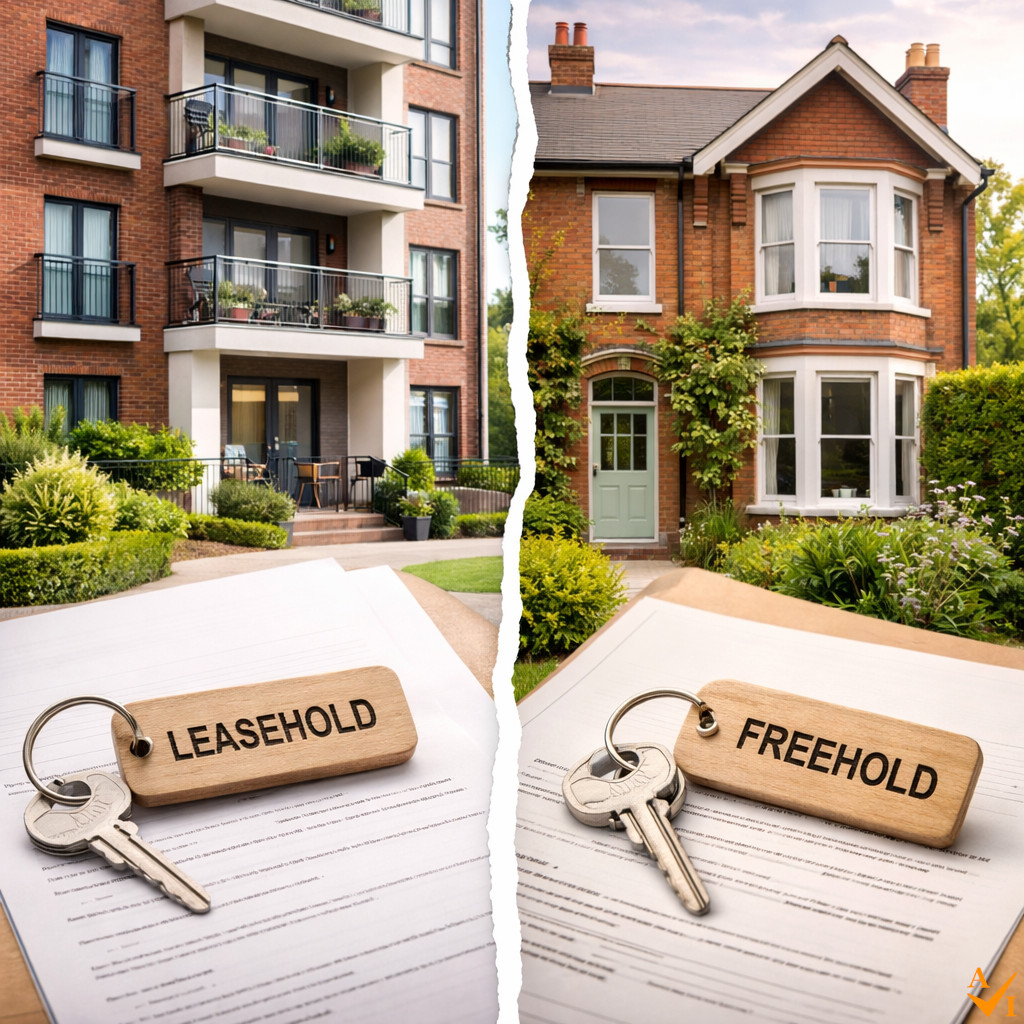
Navigating the property market can be tricky, especially when it comes to understanding the difference between leasehold and freehold properties. If you’re considering selling your home, knowing which category your property falls into is crucial. It not only affects the selling process but also influences buyer interest and the kind of information you’ll need to provide.
Freehold: The Full Ownership Experience
Owning a freehold property means you have complete ownership of both the building and the land it stands on. This type of ownership is typically associated with houses and is often the preferred choice for buyers. Why? Because it offers simplicity—no ground rent charges or lease terms to worry about.
Leasehold: A Time-Limited Arrangement
In contrast, a leasehold property means you own the building but not the land. This is more common with flats and apartments. As a leaseholder, you’ll likely pay ground rent and service charges, and the lease has a set term—ranging from 99 to 999 years.
Why Understanding This Matters
When selling a leasehold property, potential buyers will be keen to know several details: the remaining years on the lease, the amount of ground rent, service charges, and any planned works or fee increases. Short leases, generally under 80 years, can deter buyers or lower the property’s value. Extending the lease before selling could enhance your property’s appeal.
Be Ready with the Right Paperwork
For leasehold properties, a management information pack is essential. This document, obtained from the freeholder or managing agent, includes critical details about lease terms, charges, and maintenance history. Requesting this early can prevent delays in the sale process.
Understanding your property’s tenure and clearly communicating it can help avoid surprises and expedite the sale. Whether leasehold or freehold, being well-prepared puts you in the strongest position. And remember, at Sawyer & Co, we’re here to help you every step of the way.